SeeMeHired Insights
How to improve candidate experience: A Practical UK Guide

To genuinely improve the candidate experience, you need to build a hiring process that's transparent, respectful, and efficient from the very first hello to the final decision. Think clear communication, simple application steps, and treating every single applicant like a valued individual—not just another number in your system.
Listen to the podcast here:
Why Candidate Experience Shapes Your Hiring Success

In the UK's crowded talent market, how you treat applicants has become a massive business driver. It's no longer a 'nice-to-have'; it's a strategic necessity that directly impacts your ability to attract and hire the best people.
Every single interaction—from how clear your job advert is to the tone of a rejection email—shapes how a candidate sees your entire company. And that perception has real-world consequences.
A bad experience can seriously tarnish your employer brand, leading to poor online reviews and putting off future talent. On the flip side, a great experience can turn applicants into brand advocates, even if they don't get the job. They might reapply later, recommend your company to their network, or even become a loyal customer.
The Modern Talent Market Demands More
Today’s job seekers just have higher expectations. They want a hiring process that feels as seamless as their experiences as consumers—quick, intuitive, and communicative. The days of leaving applicants hanging for weeks without an update are long gone. If your process is slow or clunky, the best candidates will simply walk away and take another offer.
This pressure is only growing due to ongoing skill shortages across the country. The 2025 UK Candidate Attraction Report really brings this home, revealing that 60% of in-house recruitment teams now see candidate experience as their top sourcing priority. It's a direct response to the fact that 53% of organisations are struggling with candidate scarcity. To learn more, you can read the full report from Phenom.
A respectful, transparent, and timely hiring process is your most powerful tool for turning applicants into advocates. It’s not just about filling a role; it’s about building a reputation as an employer of choice.
At the end of the day, investing in your recruitment cycle delivers tangible business results. You can learn more about the importance of delivering a great candidate experience in our detailed guide. It's about shifting from a transactional mindset to a relationship-building one, which is key to staying competitive.
Crafting a Seamless Application Process
Let's be honest, first impressions count. For most candidates, your application form is the very first direct interaction they have with your company. A clunky, confusing, or frustrating portal can put top talent off before you even get a chance to see their CV.
It all starts with a clear and inclusive job description that actually sounds like your company and honestly outlines the role. Ditch the internal jargon and acronyms nobody outside your walls will understand. Be upfront about the important stuff: location, salary range, and working arrangements. That kind of transparency builds trust right from the start.
Simplify the Application Itself
The single biggest reason brilliant candidates abandon an application is an overly complicated form. We’ve all been there. Page after page of repetitive questions is a clear signal that you don’t value their time. The goal should be to make applying as quick and painless as humanly possible.
Don't just take my word for it. The latest research from Jobtrain’s 2025 Candidate Insights Market Report is pretty revealing. It found that application processes taking longer than 15 minutes see a staggering 50% drop-off in completion rates. That’s half your potential talent pool gone.
This data really hammers home the need for a smooth digital experience, especially now that most people are applying for jobs on their phones. You can get more insights on the latest candidate behaviours in their 2025 report.
To stop candidates from dropping off, zero in on these areas:
- Mobile-First Design: Is your application form easy to fill out on a smartphone? It has to be. Many candidates are browsing and applying while on the go.
- One-Click Applications: Let people use their LinkedIn profile or upload a CV to auto-fill the basics. This massively cuts down on tedious manual entry.
- Essential Fields Only: Stick to the absolute must-haves. You can always gather more information later in the process. Ask for their life story now, and you might never hear from them again.
To give you a clearer picture, here's a quick rundown of what to do—and what to avoid—at this crucial stage.
Application Stage Do's and Don'ts
| Practice | The 'Do' (Improves Experience) | The 'Don't' (Damages Experience) |
|---|---|---|
| Length & Complexity | Keep it under 15 minutes. Ask only essential questions. | Create a long, multi-page form that asks for repetitive information. |
| Mobile Access | Ensure the form is fully responsive and easy to use on any device. | Have a desktop-only site that’s impossible to navigate on a phone. |
| Data Entry | Allow CV parsing or LinkedIn integration to auto-fill fields. | Force candidates to manually enter every detail from their CV. |
| Transparency | Be upfront about salary, location, and key requirements. | Hide crucial details, forcing candidates to guess or assume. |
| Communication | Send an immediate, automated confirmation that the application was received. | Leave candidates in the dark, wondering if their application went through. |
Ultimately, the best practices listed in the 'Do' column aren't just about being nice; they are strategic moves to attract and retain the best people from the very first click.
The difference between a clunky portal and a smooth one is stark. A welcoming, intuitive process invites the best talent in, while a frustrating one sends them running straight to your competitors.
This is exactly where an all-in-one Applicant Tracking System like SeeMeHired comes into its own. It's built to tackle these very challenges, letting you create branded, mobile-friendly forms that are a breeze for candidates to complete.
By centralising the whole process, you guarantee a consistent and positive first touchpoint that keeps great people engaged. We’ve also put together a guide where you can learn more about mobile recruiting and how to make the most of it. Making this simple shift can seriously boost your application completion rates and, in turn, widen your talent pool.
Mastering Communication During Screening
Once an application lands in your system, the candidate experience enters its most delicate phase. This is where silence becomes your biggest enemy. Leaving applicants in the dark is the fastest way to make them feel undervalued, which can seriously damage your employer brand and push top talent toward your competitors.
A proactive communication strategy is essential here. It’s not about sending updates every single day, but about setting clear, realistic expectations from the very beginning. This simple act builds trust and shows you respect the candidate’s time and effort.
Automate Acknowledgements and Set Timelines
The very first thing you should do is acknowledge you’ve received their application. An instant, automated email confirmation is a simple but incredibly powerful touchpoint. It immediately lets the candidate know their application didn’t just disappear into a digital void.
With an Applicant Tracking System (ATS) like SeeMeHired, setting up automated email templates for this is a breeze. But don’t just settle for a generic "we've received your application." You can do so much better.
- Provide a Timeline: Give them a realistic estimate of when they can expect to hear back. Something like, "Our team will be reviewing applications over the next two weeks," works wonders.
- Explain the Process: Briefly outline the next steps in your hiring journey so they know what’s coming.
- Share Company Links: Keep them engaged by pointing them towards your careers blog, social media channels, or a video about your company culture.
This small act of transparency transforms a moment of uncertainty into a positive, professional interaction. It shows your process is organised and that you genuinely care about keeping people in the loop.
Delivering News—Good or Bad
Communicating bad news is just as important as sharing good news. How you reject a candidate says a huge amount about your company's character. Ghosting applicants is just not on; it leaves a lasting negative impression that can spread. A prompt and professional rejection, however, can turn a potentially negative interaction into a positive brand touchpoint.
Even if a candidate isn't the right fit for the current role, treating them with respect ensures they leave the process with a positive view of your company. They might reapply for a future role or recommend you to others in their network.
For candidates who aren't moving forward after the initial screen, a well-crafted email is crucial. Always personalise it with their name and the role they applied for. For those who made it to the later stages, a phone call is an even better, more personal approach.
An all-in-one ATS can help you manage this entire process efficiently. You can use templates for those initial rejections and set reminders for your team to follow up personally with candidates at later stages. For more guidance, check out our detailed advice on how to write a job rejection email that actually works.
Ultimately, closing the loop with every single applicant is a non-negotiable part of a great candidate experience.
Conducting Interviews That Attract Top Talent
The interview is much more than a simple screening tool. It's a two-way street where your best candidates are sizing you up just as much as you're sizing them up. One poorly handled interview can undo all your hard work, pushing great talent straight into the arms of your competitors.
This is a critical moment where human interaction really has to shine. While we all love digital tools for their efficiency, recent data shows that 70% of candidates still prefer the classic in-person interview.
Poor experiences have a direct, painful impact on hiring. A startling 36% of UK job seekers have turned down offers after a negative interview, which shows just how much is at stake. You can dig into more stats on how interviews shape candidate decisions over at CareerPlug.
Prepare Both Your Team and Your Candidates
A great interview experience begins long before anyone walks into the room (or joins the video call). Preparation is everything, and that means setting both your team and your candidate up for success. For hiring managers, this means proper training to keep things fair, consistent, and professional.
- Standardise Key Questions: Pull together a core set of questions tied directly to the job’s key competencies. This makes it easier to compare candidates fairly and, just as importantly, helps reduce unconscious bias.
- Train Your Interviewers: Don't just assume everyone is a natural. Offer some guidance on effective questioning techniques, active listening, and how to positively represent the company culture.
Just as important is preparing the candidate. A little bit of information goes a long way in calming nerves and helping them show you their best self. Always share the key details beforehand.
An interview should feel like a collaborative, professional conversation, not an interrogation. When candidates feel respected and prepared, they're more likely to be authentic, engaged, and walk away with a positive impression of your company.
Let them know who they'll be meeting, what their roles are, and the general format of the chat. This simple courtesy shows you value their time and are genuinely invested in having a productive dialogue.
Turn the Interview into a Conversation
The best interviews just flow. The goal is to create an environment where candidates feel comfortable enough to really open up and showcase their skills and personality. Ditch the rapid-fire, checklist-style questions and aim for a more conversational approach. For a deeper dive, check out our guide on how to conduct an effective online interview.
It’s easier than it sounds. Start with a bit of rapport-building, leave plenty of time for their questions, and actively listen to what they're saying. This approach doesn't just give you richer insights; it leaves a lasting positive impression, no matter the outcome.
This is where an all-in-one ATS like SeeMeHired makes a real difference by handling the logistics. Integrated scheduling tools get rid of the endless email chains about finding a suitable time, letting candidates book a slot that works for them. You can also centralise feedback, ensuring everyone on the hiring team has the full picture. This leads to faster, more informed decisions and a smoother process for everyone involved.
Managing Offers, Feedback and Onboarding
The final stages of your recruitment process are where lasting impressions are truly made. How you manage offers, deliver feedback, and welcome new hires will cement a candidate's perception of your company—for better or worse. This is your chance to turn every finalist into a brand advocate, regardless of the outcome.
When you're ready to extend an offer, pick up the phone. A personal call from the hiring manager is an incredibly powerful touch, adding a human element that an email simply can't match. It makes the candidate feel genuinely wanted. Follow that call up immediately with a clear, professional offer letter through your ATS, outlining all the important details.
Handling Rejection with Respect
Just as crucial is how you handle the candidates who didn't get the role. In today's market, ghosting is not an option. For anyone who made it to the final interview stages, a generic rejection email just doesn't cut it. A brief, personal phone call shows genuine respect for the time and effort they invested.
Providing constructive, thoughtful feedback is a complete game-changer. It transforms a moment of disappointment into a valuable learning experience. This simple act can turn a rejected candidate into a future applicant or even someone who recommends your company to their network.
A respectful rejection, complete with honest feedback, is a long-term investment in your employer brand. It tells the talent market that you value people, not just the role you're trying to fill.
Using an all-in-one ATS like SeeMeHired helps you manage this delicate process with the care it deserves. You can use templates for consistency but also set reminders for hiring managers to make those crucial personal calls. It’s a simple way to ensure no one is left feeling ignored or disposable.
Creating a Seamless Onboarding Transition
Once an offer is accepted, the candidate experience doesn't just end; it transitions into the employee experience. That period between acceptance and day one is critical for keeping engagement and excitement high. A disorganised, chaotic start can quickly sour the mood and lead to new-hire remorse.
Your goal is to make the move into the company as smooth and welcoming as possible. This is where your ATS becomes invaluable for automating those first administrative steps of onboarding, freeing you up to focus on the human connection.
- Automated Document Collection: Send out contracts and essential paperwork through a secure portal for digital signing. This eliminates the tedious back-and-forth emails and gets the boring stuff out of the way quickly.
- Welcome Messages: You can schedule automated welcome emails from the CEO, the line manager, and the team to start building connections before their first day even arrives.
- First-Day Itinerary: Send them a clear schedule for their first day and week. Knowing exactly what to expect helps calm any nerves and makes them feel prepared and valued from the start.
These automated yet personal touches make new employees feel supported from the moment they say "yes." A well-organised welcome sets the stage for much better long-term retention and engagement.
For more detailed strategies on this, you can learn more about how to create a standout onboarding process in our comprehensive guide. By perfecting these final steps, you ensure every candidate's journey ends on a high note, solidifying your reputation as a top employer.
How to Measure and Refine Your Candidate Experience
You can’t fix what you don’t measure. If you’re serious about improving how candidates see your hiring process, you need to get beyond guesswork and start digging into real data. This is the only way to pinpoint the weak spots, celebrate what's working, and create a feedback loop that actually drives change.
The best place to begin is by tracking a few key quantitative metrics. These numbers give you an unfiltered look at the efficiency and effectiveness of your process. This is where an all-in-one ATS like SeeMeHired becomes invaluable, pulling all the crucial data you need into one straightforward dashboard.
Key Metrics to Monitor
Don't overwhelm yourself. Start by focusing on a handful of high-impact metrics that tell a clear story about your candidate experience.
- Application Completion Rate: What percentage of candidates who start an application actually finish it? A low number is a massive red flag, often pointing to a form that’s too long, confusing, or simply isn’t mobile-friendly.
- Time-to-Hire: How long does it take, on average, to get a candidate from their initial application to a signed offer? A lengthy cycle is a surefire way to lose top talent to faster-moving competitors.
- Offer Acceptance Rate: This is the ultimate test of your entire process. A low acceptance rate could signal that your offers aren’t competitive enough, or that a poor interview experience is putting great people off at the final hurdle.
- Source of Hire: Do you know where your best hires are actually coming from? Tracking this helps you double down on the channels that work and stop wasting money on those that don’t.
A great candidate experience isn’t just about making people feel good; it’s about creating a process so efficient and respectful that it directly leads to more accepted offers from the right people.
Gathering Qualitative Feedback
Numbers tell you what is happening, but qualitative feedback explains why. Getting inside the heads of your candidates is the only way to make truly targeted improvements.
The most direct route here is through candidate satisfaction surveys. With an ATS, you can set these up to be sent out automatically at different stages of the process. Make sure you’re asking both the people you hired and those you didn't.
Even a few simple questions can uncover powerful insights:
- On a scale of 1-10, how would you rate your overall experience with us?
- How clear and consistent was the communication you received?
- What’s one thing we could have done to improve your experience?
When you analyse this feedback alongside your metrics, you get the full picture. For instance, if your time-to-hire is high and survey comments repeatedly mention "slow communication," you’ve found exactly where you need to start.
Key Metrics for Candidate Experience
To keep everything in one place, here’s a quick summary of the essential metrics you should be tracking to get a handle on your candidate experience.
| Metric | What It Measures | How to Track (e.g., ATS Analytics) |
|---|---|---|
| Application Completion Rate | The percentage of candidates who finish vs. start an application. | Tracked via your ATS or careers page analytics. |
| Time-to-Hire | The average number of days from application to offer acceptance. | Use the reporting dashboard in your recruitment software. |
| Offer Acceptance Rate | The percentage of candidates who accept a job offer. | Calculated automatically within your ATS reporting suite. |
| Source of Hire Quality | The performance and retention of hires from different channels. | Combine ATS source data with HR performance reviews. |
| Candidate Net Promoter Score (cNPS) | Candidates' willingness to recommend your hiring process to others. | Automated surveys sent via your ATS at key milestones. |
This data-driven approach ensures you're not just making changes for the sake of it. You’re constantly listening, adapting, and refining your process to remain a top choice for talent.
Common Candidate Experience Questions
Even when you're fully committed to improving your candidate experience, a few common questions always seem to pop up. Let's tackle some of the ones we hear most often from UK hiring teams.
How Can Small Businesses Improve on a Budget?
You really don't need a huge budget to make a massive difference. Honestly, the most impactful changes are often the cheapest.
It all comes down to focusing on the fundamentals that candidates actually care about. Start by writing exceptionally clear and honest job descriptions. Acknowledge every single application you receive (an automated email is perfectly fine!). Give people a realistic hiring timeline, and most importantly, always close the loop with every single person who applied.
A simple, affordable ATS can automate almost all of this, freeing you up to focus on the human side of hiring.
This infographic breaks down a simple feedback loop you can use to consistently refine your process over time.
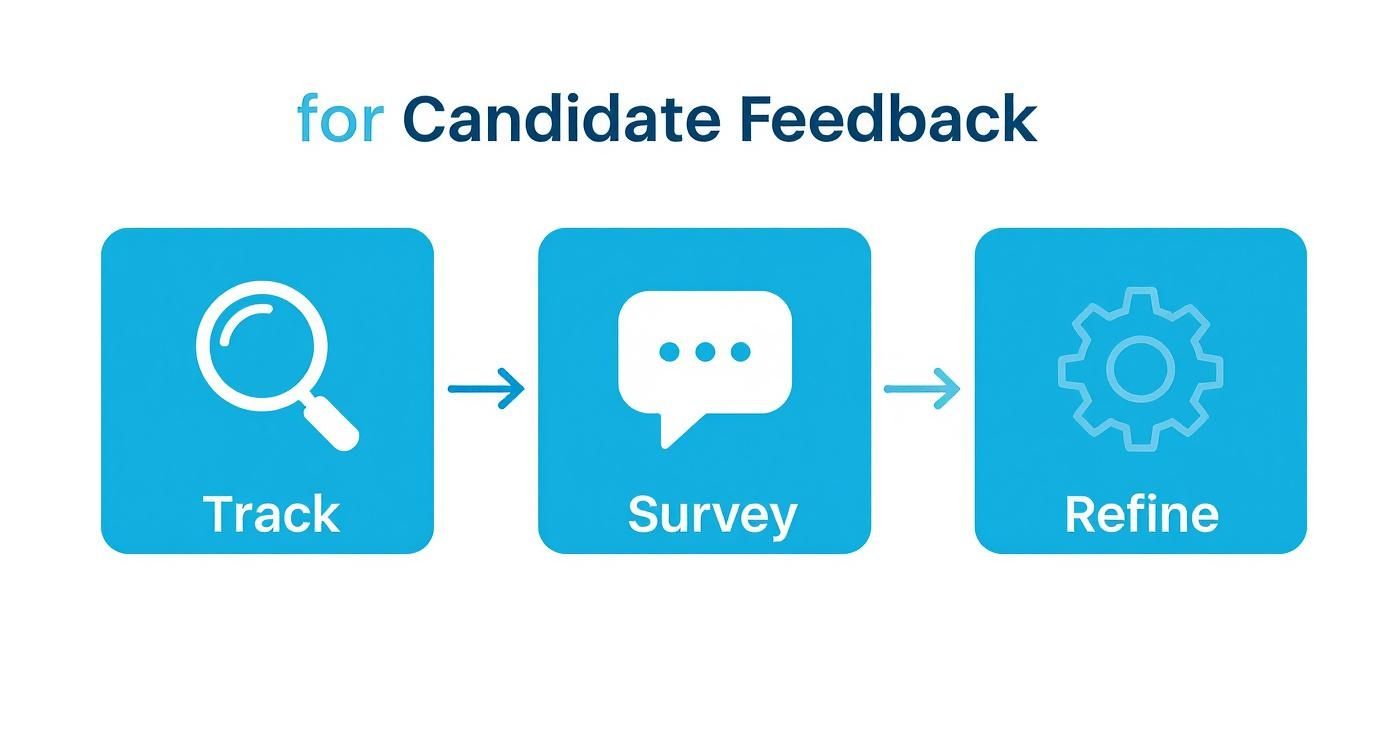
As you can see, it's about tracking the right metrics, actually listening to candidate feedback, and then making small, continuous improvements.
What is the Biggest Mistake Companies Make?
Without a doubt, the single most damaging mistake is a complete lack of communication—what's often called ‘ghosting’.
Leaving candidates hanging in the dark after they've invested time and effort into your process is more than just bad manners. It shows a fundamental lack of respect, and it’s the fastest way to demolish your employer brand. Word gets around, and that kind of reputation is incredibly hard to shake.