SeeMeHired Insights
what is video interviewing: A quick guide to virtual hiring
Video interviewing is just what it sounds like: a way to hold interviews remotely using video technology instead of relying on the old-school phone screen or in-person meeting. It’s not one-size-fits-all, though. The two main flavours are live interviews, which are your standard real-time video calls, and pre-recorded interviews, where candidates record their answers to your questions on their own time.
Listen to the podcast here:
Understanding How Video Interviewing Works
Think about how we've gone from handwritten letters to phone calls, and now to video chats in our professional lives. Each shift made communication faster, more direct, and a lot more personal. Video interviewing is simply the next logical step for hiring, bringing recruitment into the modern age.
At its core, a video interview is a job interview done over video instead of face-to-face. This simple change allows companies and candidates to connect from anywhere, breaking down geographical walls and opening up the talent pool way beyond your local area. It’s more than just a substitute for in-person meetings; it’s a strategic tool that can completely reshape the early stages of your hiring process.
The Two Pillars of Video Interviewing
This modern approach to hiring really comes down to two distinct methods, each with its own strengths:
Live (Synchronous) Interviews: This is the digital version of a classic interview. You and the candidate jump on a video call at a set time for a live, two-way conversation. It gives you that natural back-and-forth, lets you ask follow-up questions on the fly, and helps build a real personal connection.
Pre-Recorded (Asynchronous) Interviews: With this format, you create a list of questions, and candidates get a link to record their answers whenever it suits them. This one-way street gives candidates massive flexibility and lets your hiring team review submissions quickly and efficiently. It’s a game-changer for high-volume screening.
The real goal of video interviewing isn’t just to see a candidate on screen. It’s about creating a hiring process that is more flexible, efficient, and accessible for everyone involved. It works hand-in-hand with other tools, and you can learn more about its role in the bigger picture by exploring what is recruitment automation and how it's shaping HR.
Once you get your head around these two fundamental types, you start to see just how powerful and adaptable video interviewing can be for tackling today’s biggest hiring challenges.
Exploring Different Video Interview Formats
Not all video interviews are the same. Just like a quick text message fills a different need than a face-to-face chat, video interviews come in distinct formats, each designed for a specific stage of the hiring process.
Getting to grips with these variations is the first step to success, whether you’re a recruiter designing a workflow or a candidate getting ready to apply. The two main players are live (synchronous) and pre-recorded (asynchronous) interviews, and each one brings something different to the table.
Live Synchronous Interviews
Think of a live video interview as the digital version of a classic, in-person meeting. Both you and the candidate jump on a video call at the same time, allowing for a real, spontaneous conversation to unfold.
This format lets you ask follow-up questions on the fly, gauge body language, and build the kind of personal connection that’s tough to replicate any other way. It's the perfect choice for those later-stage interviews where you’re really digging into personality, team fit, and complex problem-solving skills.
Pre-Recorded Asynchronous Interviews
On the other hand, a pre-recorded or asynchronous interview is a one-way street. The recruiter sets up a list of questions, and candidates get a link to record their answers whenever it suits them, usually within a certain timeframe. There’s no live interaction at all.
This modern approach is really just the next logical step in how we communicate for work, as this infographic shows.
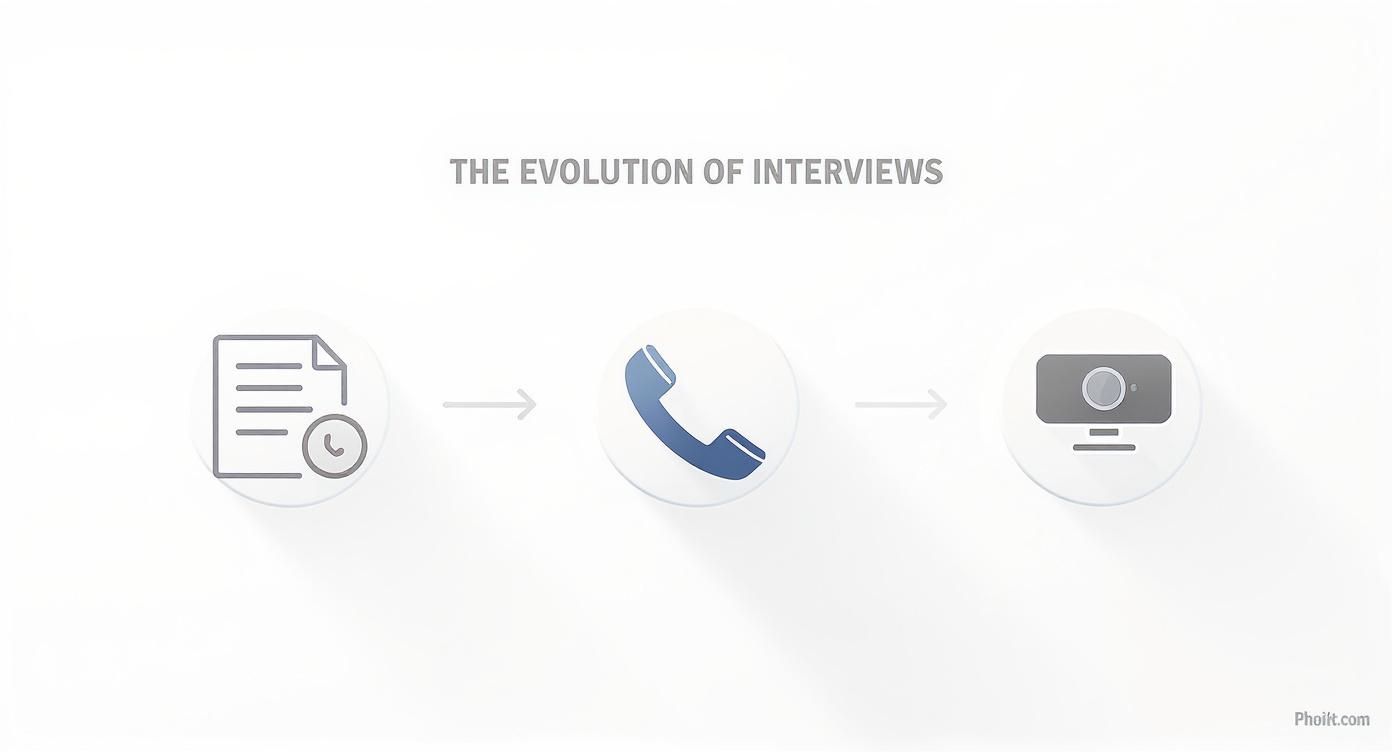
This move towards digital methods like asynchronous interviews is all about finding more efficiency and flexibility in hiring. The popularity of this one-way format has shot up, with its adoption growing by a massive 67% since 2020. This jump really highlights how central these tools have become for modern recruitment teams. If you’re curious, you can dig into the latest video interview statistics to see the full picture.
This method gives candidates incredible scheduling freedom and lets hiring teams review a huge volume of applicants quickly and fairly. To make the distinction crystal clear, here’s a side-by-side comparison.
Live vs Pre-Recorded Video Interviews
To help you decide which format fits your needs, let's break down the key differences between a live chat and a pre-recorded submission.
| Feature | Live Video Interview | Pre-Recorded Video Interview |
|---|---|---|
| Interaction | Real-time, two-way conversation | One-way, candidate records answers |
| Scheduling | Requires coordinating schedules | Highly flexible, done on candidate's time |
| Best For | In-depth, later-stage interviews | High-volume, early-stage screening |
| Key Benefit | Fosters personal connection | Maximises efficiency and scalability |
By understanding when and how to use each format, both companies and job seekers can prepare for a much smoother video interviewing experience. It’s all about picking the right tool for the right stage of the journey.
Why Companies Are Adopting Video Interviews
The massive shift to video interviewing isn't just about following the latest HR trend. It's a strategic decision, plain and simple, and it's driven by real, measurable benefits that tackle some of the oldest headaches in recruitment.
For companies, this isn't just a new tool—it's a fundamental improvement in how they find and hire great people. Let’s break down exactly why so many organisations are making video interviews a non-negotiable part of their hiring process.
Accelerating the Hiring Cycle
In a competitive talent market, speed is everything. Top candidates aren't waiting around. Traditional hiring, with its endless phone screens and scheduling nightmares, can drag on for weeks, by which time your ideal person has likely accepted another offer.
Video interviews completely change the game by slashing that timeline.
In fact, video interviews are a staggering six times faster than phone interviews. When you're trying to snap up top talent before a competitor does, that kind of efficiency is a massive advantage.
This speed means your hiring team can connect with more candidates in less time, moving the best ones through the pipeline before they're gone. It's about being nimble and responsive.
Significant Cost and Time Savings
The savings go way beyond just cutting out travel costs for candidates. Think about the sheer admin time sunk into coordinating schedules across different time zones for what might just be a 30-minute chat. Video interviews, particularly the pre-recorded kind, all but eliminate this logistical nightmare.
That efficiency directly translates into money saved. It’s no surprise that 45% of recruiters have seen a significant drop in hiring costs after bringing video interviewing tools on board.
Accessing a Global Talent Pool
This might be the biggest game-changer of them all: the ability to hire the best person for the job, no matter where they live. By removing the need for candidates to be physically present for the initial stages, you suddenly have access to a truly global talent pool.
Your search is no longer limited by geography. This opens the door to incredible talent you would have otherwise missed and powerfully supports diversity and inclusion efforts by making your roles accessible to a much wider range of people. If you're looking to modernise your approach, check out our guide on why smart companies are abandoning traditional hiring.
Enhancing Team Collaboration
Finally, platforms like SeeMeHired don't just speed things up; they improve the quality of your hiring decisions through better teamwork. Instead of relying on one person's hurried notes from a call, the entire hiring team can review a candidate's recorded interview.
This makes the evaluation process far more objective and consistent. Team members can watch, score, and leave comments on their own schedule, leading to more considered, data-backed decisions. It gets everyone on the same page, helps reduce individual bias, and ultimately, helps you make a stronger, more confident hire.
The Candidate Experience: Benefits and Challenges
For candidates, video interviewing is often a mixed bag. On one hand, it offers fantastic convenience; on the other, it introduces a whole new set of anxieties. It’s a classic case of balancing some significant advantages with a few very real hurdles.
From a candidate's point of view, the upsides are pretty clear right from the start. Being able to interview from the comfort of your own home cuts out travel time, costs, and the stress of finding your way around an unfamiliar office. This makes the whole process more accessible, opening up opportunities for people regardless of where they live or their personal circumstances.
Pre-recorded interviews can also take some of the heat off. They give you that rare chance to pause, collect your thoughts, and put together a more considered answer, which is a massive plus for anyone who doesn't feel they shine under live pressure. This thoughtful approach goes a long way in shaping a better overall experience. You can find more on this in our guide on how to create an outstanding candidate experience.

Facing the Digital Hurdles
But that convenience comes with its own baggage. The fear of a tech meltdown is probably the biggest worry for most candidates. A dodgy internet connection, a lagging video, or a mic that suddenly cuts out can throw an entire interview off course, creating a poor impression for reasons completely beyond their control.
And this isn't just a minor inconvenience; it's a widespread problem.
Despite the obvious benefits, 62% of candidates say they've run into technical problems like a poor connection or audio glitches during a virtual interview. These hitches can unfairly tank their performance and how they're perceived.
This really hammers home the need for recruiters to use reliable platforms and provide crystal-clear instructions to keep things running smoothly.
The Human Connection and Fairness
Beyond the tech gremlins, there’s a deeper concern about the human side of things. Some candidates feel that a screen creates an emotional barrier, making it tougher to build a genuine rapport or let their personality shine through. It can make the whole interaction feel a bit cold and impersonal.
This worry also touches on fairness and equity. Shockingly, 1 in 3 candidates reports having faced some kind of bias or discrimination during a video interview. Whether it’s unconscious bias linked to someone’s background or worries about how AI screening tools might interpret their answers, the potential for an unfair process is a real concern.
Ultimately, while video interviewing offers unmatched flexibility, it's on both recruiters and candidates to acknowledge and tackle these challenges head-on. The goal is to make sure the process isn't just efficient, but also fair, personal, and a positive step for everyone involved.
Proven Best Practices for a Successful Interview
Whether you're the one conducting the interview or the one in the hot seat, success in a video interview always comes down to thoughtful preparation. Getting the tech and the environment right means it can fade into the background, letting the actual conversation shine.
This practical playbook covers the essentials for both candidates and recruiters, helping you turn potential digital pitfalls into professional triumphs.
For candidates, a winning interview really rests on three core pillars of preparation. Nail these, and you can forget about the tech and focus entirely on showcasing your skills and personality.
A Candidate's Checklist for Success
Getting the fundamentals right before the call begins is non-negotiable. Trust us, a few minutes of prep work can make all the difference in how you're perceived.
- Technical Setup: Always, always test your equipment beforehand. Check your camera, microphone, and internet connection to make sure everything is stable and working as it should. A last-minute tech hiccup is a distraction you just don't need.
- Environment: Find a quiet, private space where you won’t be interrupted. Glance over your shoulder and pay attention to what's in your background—it should be tidy and professional. Good lighting is also crucial; try to have a light source in front of you so you’re not cast in shadow.
- Presentation: Dress as you would for an in-person interview. It's less about what they see and more about getting yourself into a professional mindset. During the call, make a real effort to look at the camera, not just at the person on the screen. This small adjustment feels like direct eye contact and builds a much stronger connection.
The goal is to make the technology invisible. When your setup is seamless, the focus returns to what truly matters: the quality of the conversation and the connection you build with the interviewer.
Best Practices for Recruiters
For hiring managers, the responsibility is to create a fair, positive, and efficient experience that reflects well on the company. This is all about setting clear expectations and structuring the process for total consistency.
For more in-depth strategies, our guide on how to conduct an effective online interview provides a heap of valuable insights.
Providing clear, detailed instructions for candidates is the perfect first step. Explain which platform you're using and maybe offer a few tips for a smooth connection. This simple act of support can massively reduce a candidate's anxiety.
It’s also vital to train your interviewers on how to manage a virtual conversation effectively. This includes learning how to spot and mitigate unconscious bias, which can sometimes be amplified in a digital setting. Using a structured interview format with consistent questions for all candidates is a powerful way to ensure a fair and equitable evaluation process for everyone involved.
How Video Tools Are Shaping the Future of Hiring
Video interviewing has come a long way from being a pandemic stopgap. It's now a core, evolving piece of the modern hiring toolkit. The conversation has shifted from if companies should use video to how they can weave it into their recruitment strategy for the biggest impact.
The most important change we're seeing is the move away from clunky, standalone video apps. Instead, video interviewing is becoming a seamless feature inside all-in-one platforms like SeeMeHired. This creates a single, unbroken journey from the moment a candidate applies to the final offer, meaning recruiters no longer have to waste time juggling different systems and logins.
The Rise of Integrated and Intelligent Hiring
As these tools bed down into applicant tracking systems, the next frontier is the responsible use of Artificial Intelligence. AI is starting to pop up in features that help analyse recorded answers, spotting key skills or communication styles based on criteria you set beforehand. This can give hiring teams solid data points to back up their decisions.
But this progress comes with a serious responsibility. It's absolutely vital to make sure AI is used to remove bias, not create new kinds of it. The process has to be fair and transparent for every single person who applies. You can learn more about how different systems work together in our list of the top 7 recruitment technology tools in 2024.
The future of hiring isn’t just about video; it's about building a smarter, more streamlined process. The goal is to create a data-driven, efficient, and candidate-centric strategy that benefits both the organisation and the talent it seeks to attract.
This trend is already taking root across the UK. It’s estimated that roughly 90% of companies will use video interviewing in the early hiring stages by 2025—a massive leap from just 25% before the pandemic. To get a sense of just how big this shift is, you can discover more insights about job interview statistics on standout-cv.com.
At the end of the day, video interviewing isn't an optional add-on anymore; it's a fundamental part of modern, effective recruitment.
Common Questions About Video Interviewing
As video interviews become a staple in modern recruitment, it’s natural for both candidates and hiring managers to have questions. Getting to grips with this digital process can feel a bit new, so let’s clear up some of the most common queries to help everyone feel more prepared and confident.
We’ll tackle everything from the tech setup to what you should wear on camera.
Is a Video Interview the Same as a Zoom Call?
Yes and no. While they rely on similar technology, the format can be quite different. A live video interview runs just like a normal video call on a platform like Zoom or Microsoft Teams, with a real-time conversation between you and the interviewer.
However, a growing number of roles now use pre-recorded (asynchronous) video interviews. For these, you’re given a set of questions and you record your answers on your own time, without anyone else on the call. Think of it as a one-way conversation designed to make early-stage screening much more efficient.
What Is the Best Way to Prepare?
Solid preparation breaks down into three key areas. First up, do a tech check. Test your camera, microphone, and internet connection well ahead of your scheduled interview time to avoid any last-minute panics.
Next, get your environment sorted. Find a quiet, well-lit spot with a tidy, professional-looking background where you’re unlikely to be interrupted.
The single most important tip for candidates? Look directly into the camera lens when you’re speaking, not at the interviewer’s face on the screen. It’s a simple trick, but it creates the feeling of genuine eye contact and helps you build a much stronger connection.
How Should I Dress for a Video Interview?
Simple: dress exactly as you would for an in-person interview at that company. Even though you’re at home, dressing professionally signals that you’re taking the opportunity seriously and helps get you into the right headspace.
Ready to make your hiring process faster, fairer, and more effective? SeeMeHired integrates seamless video interviewing into a complete, all-in-one applicant tracking system. Discover how you can streamline screening, improve collaboration, and secure top talent by visiting https://seemehired.com.