Industry Trends
UK Recruiting and Retention Strategies

Recruiting and retention are two sides of the same coin. Think of it this way: recruiting is how you bring talent in, and retention is how you keep them. When you neglect one, you completely undermine the other, creating a costly, frustrating cycle where new hires are constantly replacing talented veterans heading for the door.
Listen to the podcast here:
Why Recruiting and Retention Are a Single Conversation
It's time to stop treating recruiting and retention as separate to-do lists managed by different teams. Let’s use an analogy: imagine your company is a bucket you're trying to fill with talent. You can spend all your time and money pouring new people in, but it’s pointless if there are massive holes in the bottom letting your most experienced employees leak out.
This simple shift in perspective reframes the entire approach. It shows how every single touchpoint in the recruitment process is actually the first step in long-term retention. This flow below shows exactly how attracting, engaging, and keeping great talent are all interconnected stages in one continuous loop.
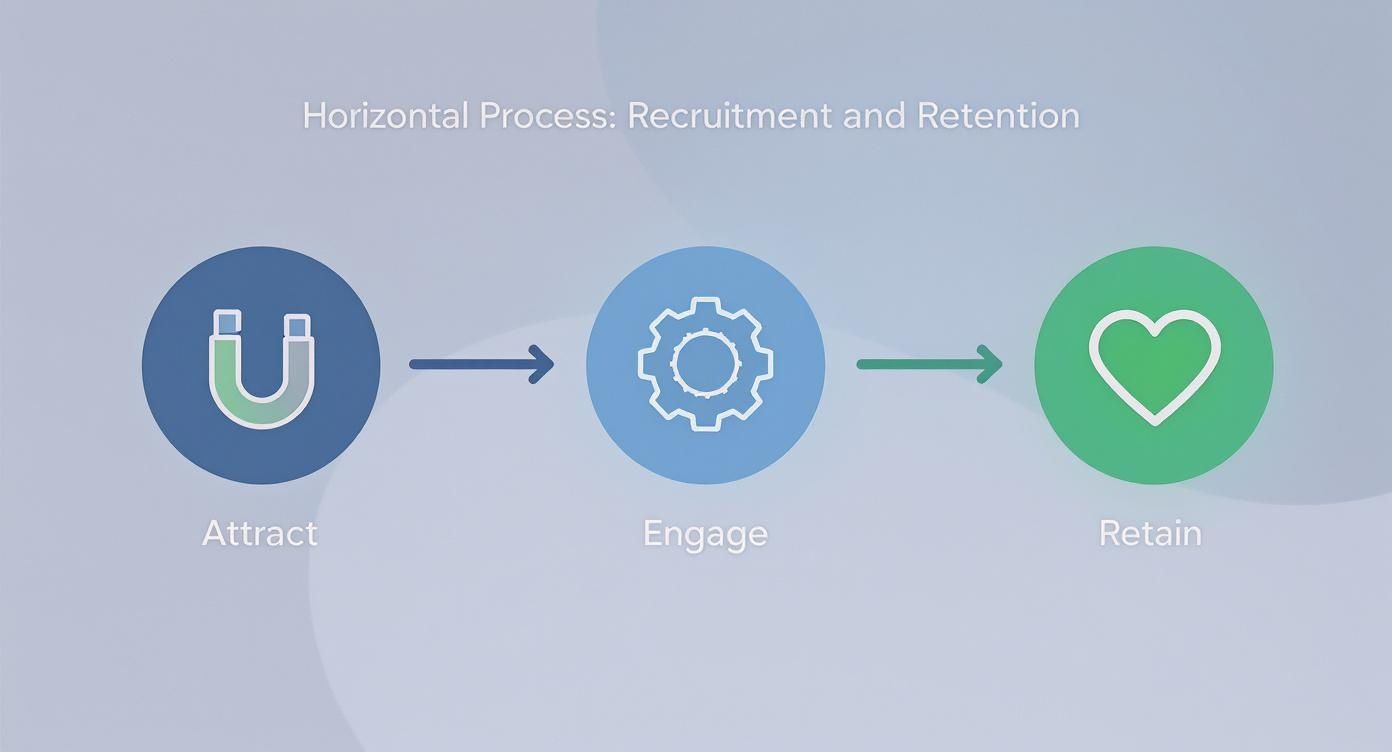
As the graphic makes clear, a successful talent strategy doesn't just stop the moment an offer is signed. It transitions smoothly into keeping that new hire engaged, motivated, and committed for the long haul.
To break it down even further, here's a quick look at how the two concepts differ on the surface, yet work towards the same ultimate goal.
Recruiting vs Retention At a Glance
| Aspect | Recruiting Focus | Retention Focus |
|---|---|---|
| Primary Goal | Attracting and hiring new talent to fill open roles. | Keeping existing, high-performing employees engaged and committed. |
| Key Activities | Sourcing, screening, interviewing, employer branding, making offers. | Onboarding, training, performance management, engagement surveys, career pathing. |
| Timeline | Short-term: Focused on filling a specific vacancy quickly. | Long-term: An ongoing effort throughout an employee's entire tenure. |
| Measures of Success | Time-to-hire, cost-per-hire, quality of hire. | Employee turnover rate, employee satisfaction (eNPS), tenure length. |
| Underlying Philosophy | "Bringing them in." | "Making them want to stay." |
While their immediate activities are different, their success is deeply intertwined. Great recruiting makes retention easier, and strong retention builds an employer brand that attracts top candidates.
The Foundation of a Unified Strategy
In the UK's constantly shifting job market, what people expect from an employer has changed dramatically. A seamless, positive experience—from the first job ad they see to their five-year work anniversary—isn’t just a ‘nice-to-have’ anymore. It’s the very core of building a resilient, modern workforce.
The promises you make during the recruitment stage absolutely must match the reality of day-to-day work life. When they don't, trust erodes almost instantly, and even your most enthusiastic new hire will start looking for the exit.
This critical connection begins the moment a candidate first interacts with your brand. The way you describe a role, how you communicate during interviews, and the professionalism you show during the offer process all set the stage for their entire employment journey. A positive, transparent recruitment process builds a foundation of goodwill that makes effective retention possible from day one.
A great candidate experience can increase new hire retention by up to 38%. This proves that how you hire has a direct and measurable impact on how long people stay.
Building a System for Longevity
The ultimate goal is to build a system where great people want to join you and are then given every reason to stay and grow. This holistic view is a fundamental part of a broader talent management strategy, something you can explore further by reading our guide on what is talent management in our quick guide. An integrated approach means looking at the entire employee lifecycle as one continuous loop, where each phase strengthens the next.
This involves a few key pillars:
- Aligning Promises with Reality: Make sure the exciting culture and career opportunities you talk about in job ads are genuinely part of your workplace.
- Creating Seamless Transitions: Turn candidates into new team members with a structured, welcoming onboarding process that makes them feel valued from the start.
- Fostering a Growth Environment: Show that the career development you discussed during interviews wasn't just talk. Make it a core part of your company's values and daily practice.
By viewing recruiting and retention as a single, ongoing conversation, you shift your mindset from simply filling empty seats to building a stable, motivated, and highly effective team that lasts.
Decoding the UK's Talent Turnover Problem
High employee turnover isn’t just a number on a spreadsheet. It's a direct threat to your company’s stability, momentum, and long-term growth.
When talented people consistently walk out the door, it kicks off a costly cycle of disruption. This damages everything from team morale to client relationships. So, to really improve your recruiting and retention, you first need to get to grips with why people are leaving in the first place.

It's easy to fall back on generic excuses like "it's just the industry," but that won't solve anything. The real answers lie in the data-backed reasons UK employees choose to quit—and they often have very little to do with salary. It’s all about their daily work experience.
The numbers paint a clear picture. The average annual employee turnover rate in the UK hovers around 15%, which means a huge chunk of the workforce leaves their job each year. Digging deeper, feeling unmotivated is a reason cited by 15% of those resigning, highlighting a serious disconnect between what companies offer and what employees truly need. You can explore the latest employee retention statistics for the UK to see the full story.
The Real Cost of a Revolving Door
The financial hit of replacing an employee goes way beyond recruitment fees. When you lose a team member, you’re hit with a cascade of hidden costs that add up frighteningly quickly.
These expenses drain resources that could have been invested in growth, innovation, or rewarding the loyal team members who have stuck around.
- Recruitment Costs: This covers everything from advertising the role and paying agency fees to the countless hours your hiring managers spend screening and interviewing.
- Onboarding and Training: Getting a new hire up to speed takes significant time and resources, including formal training sessions and all the informal support they need from colleagues.
- Lost Productivity: A new employee can take months to reach the same productivity level as the person they replaced, creating a performance gap in the team.
- Cultural Impact: High turnover can crush morale. Remaining staff often feel overworked, disconnected, and might even start worrying about their own job security.
The true cost of replacing an employee is often estimated to be between six to nine months of their annual salary. For a mid-level manager earning £50,000, that’s a £25,000 to £37,500 hit to your bottom line.
This financial drain builds a powerful business case for focusing on retention. Honestly, investing in your current team is one of the smartest financial decisions you can make. It protects both your budget and your company culture.
Why People Actually Leave Their Jobs
While compensation plays a part, the main reasons for turnover are almost always rooted in the work environment itself. As the old saying goes, people leave managers, not companies.
They leave when they feel stuck, unappreciated, or disconnected from the company’s mission. Identifying these core issues is the first step toward building a workplace that people genuinely don't want to leave.
Key drivers behind UK resignations include:
- Poor Leadership and Management: Ineffective managers who fail to support, recognise, or communicate with their teams are a leading cause of people heading for the exit.
- Lack of Career Growth: If employees see no clear path for advancement or skill development, they’ll inevitably start looking for opportunities elsewhere.
- Feeling Undervalued and Unmotivated: A lack of recognition, purpose, and a real connection to their work can quickly lead to disengagement and, eventually, resignation.
Addressing these deep-seated problems requires a strategic approach. For some practical next steps, check out our guide covering 7 proven ways to reduce employee turnover in the UK. By tackling the root causes, you can transform retention from a reactive headache into a proactive strategy for sustainable success.
How to Build a High-Impact Recruitment Engine
Your recruitment process is much more than a simple way to fill empty seats; it's the first, and arguably most important, step in your entire retention strategy. Think of it like laying the foundation for a house. If that foundation is weak, unstable, or poorly aligned, no amount of effort later on can stop the cracks from appearing.
A high-impact recruitment engine is designed to attract people who aren't just qualified on paper, but are genuinely built to last within your company’s unique culture. This means shifting your focus from speed to substance. Instead of just trying to get a role filled as quickly as possible, the real goal is to create a process that uncovers a long-term match between the candidate and the company.
Every single interaction, from the job description right through to the final offer, sets expectations and builds the trust needed for a lasting relationship. Get this right, and you'll hire people who feel connected and committed from day one.
Craft Compelling Job Descriptions That Attract the Right Fit
The whole journey starts with your job description. This is your first real chance to communicate what your company is all about and what the role actually entails, acting as a filter to attract the right kind of person. A generic, bullet-point list of duties will only ever attract generic applicants. A compelling description, on the other hand, tells a story.
Instead of just listing tasks, focus on the impact. Explain how this role contributes to the team's goals and the company’s wider mission. Use language that reflects your culture—whether that’s collaborative and creative or analytical and precise. This simple approach helps candidates self-select. Those who resonate with your mission and vibe will be more likely to apply, and more importantly, more likely to thrive once they're on board.
Key Takeaway: A well-crafted job description doesn't just describe a job; it sells a future. It should make the right candidate feel like the role was written specifically for them, setting the stage for a strong recruiting and retention cycle.
Deliver an Exceptional Candidate Experience
How you treat candidates during the hiring process is a direct reflection of how you treat your employees. A poor experience—riddled with bad communication, disorganisation, or a simple lack of respect—sends a powerful, negative message. In fact, research shows a negative candidate experience can deter 60% of applicants from ever applying again.
Worse still, 72% will share their bad experience online, actively damaging your employer brand.
To build a positive experience that people remember for the right reasons, focus on three core pillars:
- Consistent Communication: Keep candidates in the loop at every stage. Even a simple automated message confirming their application or letting them know about a delay shows you respect their time and effort.
- Genuine Respect: Treat every single applicant as a potential future colleague or brand ambassador. Provide constructive feedback when you can and always be professional, whether they're a perfect fit or not.
- Efficiency and Clarity: Outline the hiring process from the very beginning so candidates know what to expect. Use technology to make scheduling and communication seamless, removing the kind of friction that causes top talent to drop out.
Creating a positive experience turns applicants into advocates, even the ones who don't get the job. They walk away with a good impression of your company, which only strengthens your reputation in the talent market.
Leverage Technology for Smarter Hiring Decisions
In modern recruitment, gut feeling alone just isn't enough. You need data to make informed, unbiased, and effective hiring decisions. This is where an Applicant Tracking System (ATS) like SeeMeHired becomes indispensable. An ATS acts as the central nervous system for your recruitment engine, managing everything from posting jobs to analysing hiring metrics.
A good ATS helps you move beyond intuition by providing concrete data on what’s actually working. You can track which sourcing channels deliver the best candidates, pinpoint bottlenecks in your hiring process, and ensure every applicant receives timely communication. This doesn't just make your workflow smoother; it gives you the insights needed to refine your approach over time.
By organising your process, you free up your team to focus on the human side of recruitment—building relationships and assessing cultural fit. To learn more about modernising your approach, you can explore some of the top recruiting strategies for 2025 that rely heavily on smart technology and data.
Creating a Workplace People Never Want to Leave
Great employees rarely stay just for a bigger paycheque. They stick around because they feel valued, challenged, and genuinely connected to something bigger than just their job title. While your recruitment efforts get them in the door, it’s the culture and environment you build that convinces them to stay for the long haul. This is where retention really begins.
Creating a workplace people love isn’t about flashy perks or expensive office furniture. It’s about laying a solid foundation of trust, opportunity, and mutual respect. When your team can clearly see their future within your organisation, they stop looking for one somewhere else.
This whole process kicks off on day one. A truly effective retention strategy is built on a few core pillars: a meaningful onboarding experience, real opportunities for professional growth, and clear, achievable career paths.

The Critical Role of Onboarding in Retention
Onboarding is your first, and arguably best, chance to prove that the amazing company culture you talked about during the hiring process is the real deal. It's so much more than just sorting out paperwork and IT logins; it’s the strategic process of welcoming new hires into the company’s mission, values, and team.
Get it right, and you set a positive tone for their entire time with you, confirming they made the right choice. But if you neglect this crucial stage, new starters can feel isolated and disconnected, sowing seeds of doubt before they’ve even finished their first project. For a deeper dive, check out our guide on how to create a standout onboarding process.
Fostering Growth and Clear Career Paths
Top performers thrive on momentum. If they feel like they’re treading water, they will inevitably start looking for a role where they can move forward. This is why visible, accessible opportunities for growth are completely non-negotiable for effective recruiting and retention.
And growth doesn’t always mean a straight climb up the corporate ladder. It can take many different forms:
- Skill Development: Offering training, workshops, or certifications that help your team master their current role and gear up for future ones.
- Mentorship Programmes: Connecting junior staff with experienced leaders who can offer invaluable guidance, support, and a friendly ear.
- Internal Mobility: Building clear pathways for people to move into different departments or roles that align with their evolving skills and interests.
When employees believe their company is genuinely invested in their career development, they are significantly more likely to stay. The key is making these paths clear and achievable, not just vague possibilities.
Without these opportunities, even your most dedicated employees will eventually hit a ceiling. When that happens, the only way for them to grow is to leave.
The Undeniable Link Between Managers and Team Stability
Ultimately, an employee’s day-to-day experience is shaped by one person more than anyone else: their direct manager. A manager's ability to lead, support, and communicate has a direct and powerful impact on team stability. They are the ones who turn company culture from a mission statement into a daily reality.
The data on this is incredibly clear. Projections show that nearly one in four UK workers (23%) plan to quit their jobs in 2025, with leadership quality being the most influential factor. An employee with a great manager has a 94% commitment to stay, but that figure plummets to just 19% when their leadership is poor.
Great managers are your secret weapon for retention. They make it happen through simple but powerful actions:
- Regular Recognition: Acknowledging good work makes people feel seen and appreciated.
- Genuine Flexibility: Understanding that people have lives outside of work builds immense loyalty.
- Open Dialogue: Creating a safe space for honest feedback fosters trust and transparency.
Investing in training your managers to be better coaches and leaders is one of the highest-return investments you can make in your retention strategy. They are your front line, creating micro-environments where your best people can truly thrive.
Winning the Talent War in High-Turnover Industries
In sectors like retail, hospitality, and healthcare, high staff churn can feel like an unavoidable part of the business. You get caught in a constant loop of hiring, training, and then losing people, which drains resources and creates instability. But this revolving door isn't a given; it's a problem with a solution, and it starts by looking at recruiting and retention as two sides of the same coin.

To really win the talent war in these industries, you need to move beyond the old playbook. It's about getting to the root of what drives hourly workers away—things like unpredictable schedules, wage instability, and feeling undervalued.
The challenge is very real. In the UK's retail and hospitality sectors, a massive 63% of hourly workers are planning to quit within the next year. And when you ask what keeps them, 72% point to schedule flexibility as a top priority, while 30% need instant access to their earned wages. This data shines a light on a huge disconnect that businesses need to fix to keep their teams together.
Addressing the Core Needs of Hourly Workers
To boost retention, you have to genuinely listen to your hourly workforce. Their priorities often look very different from salaried, office-based employees. The good news is, there are modern tools that can tackle these core challenges head-on and make a massive difference to morale.
Three areas need your immediate attention:
- Scheduling Flexibility: Rigid, last-minute schedules create enormous stress and make any kind of work-life balance impossible. Modern scheduling software can change that by giving employees more say and predictability.
- Financial Stability: The long wait between paydays is a huge source of anxiety for many. Tools that offer earned wage access (EWA) allow employees to draw on their wages as they earn them, giving them critical financial breathing room.
- Managerial Support: Frontline managers are often drowning in admin, spending hours on schedules instead of leading their teams. Freeing them up means they can focus on coaching, recognition, and building the relationships that make people want to stay.
By focusing on what truly matters to your hourly staff—control over their time and money—you can create a more stable, engaged, and loyal workforce. It’s a shift from a transactional relationship to a supportive partnership.
Practical Strategies for Immediate Impact
Making these changes doesn't require a complete overhaul overnight. You can start with small, focused initiatives that deliver real results and build momentum. The same principles hold true across different high-turnover sectors, whether it’s on the retail floor or in a care home.
For instance, many of the retention struggles in healthcare mirror those in hospitality. If you’re in that sector, our guide on the top healthcare recruitment strategies for 2025 has some valuable insights that you can easily adapt.
Here are a few actionable steps you can take right now:
- Survey Your Team: Go straight to the source. Ask your employees about their biggest frustrations with scheduling and pay. Use their feedback to decide where to focus first.
- Pilot a Flexible Scheduling System: Test a new scheduling tool with a single team or location. This lets you measure the impact on morale and attendance before committing to a company-wide rollout.
- Explore Earned Wage Access Providers: Look into EWA platforms that can integrate with your current payroll system. It’s a high-impact benefit that can be offered with minimal administrative hassle.
By tackling these fundamental issues, you directly improve the day-to-day reality for your employees, giving them powerful reasons to stick around and grow with you.
Measuring What Matters for Recruiting and Retention
You can't fix what you don't measure. If you want to move your talent strategy from guesswork to a data-driven science, you have to start tracking the right numbers. It’s the only way to spot hidden problems, prove the value of your HR initiatives, and make smarter decisions that actually build a stronger team.
This isn’t just about collecting data for the sake of it. It’s about understanding the story your numbers are telling. When you connect the dots between your hiring efforts and your retention outcomes, you start to see a clear picture of what’s working and what needs your immediate attention.
Key Recruitment Metrics to Track
The hiring process is full of signals that tell you how healthy and efficient it is. By focusing on a few core metrics, you'll know exactly how well you're attracting and hiring the people you need.
Time to Hire: This is simply the number of days from when a job is posted to when an offer is accepted. A long time to hire is a big warning sign. It often means your best candidates are getting snapped up by competitors while you’re stuck in process bottlenecks.
Source of Hire: Where do your best people actually come from? Tracking whether they come from job boards, referrals, or social media shows you which channels deliver the highest return. It helps you put your budget where it really counts.
Cost per Hire: This is the total recruitment spend (think ads, agency fees, and staff time) divided by the number of new hires. Keeping an eye on this helps you manage your budget and justify investing in tools that make a real difference.
An Applicant Tracking System (ATS) like SeeMeHired takes the pain out of this. It automatically collects this data and presents it in real-time dashboards, turning raw numbers into clear, actionable insights. No more wrestling with spreadsheets—just focus on strategy.
Essential Retention Metrics for a Healthy Workforce
Once someone is on the team, the game shifts to keeping them engaged, happy, and committed. Retention metrics are your window into the health of your company culture and the overall employee experience.
Employee Turnover Rate: This is the percentage of employees who leave your company over a certain period. A high turnover rate is a massive red flag, pointing to deeper issues with management, culture, or a lack of career progression.
Employee Net Promoter Score (eNPS): A simple, powerful survey that asks employees how likely they are to recommend your company as a great place to work. It’s a quick pulse check on overall satisfaction and loyalty.
Average Tenure: How long, on average, do people stick around? A low average tenure, especially in key roles, suggests you might not be providing the long-term growth opportunities or supportive environment that people need to stay.
To truly understand the health of your HR function, you need a clear, at-a-glance view of these critical numbers. A well-organised HR dashboard brings together the most important recruiting and retention metrics, allowing you to monitor trends, spot potential issues early, and make informed decisions.
Essential Metrics for Your HR Dashboard
| Metric | What It Measures | Why It Matters |
|---|---|---|
| Time to Hire | The number of days from job posting to offer acceptance. | A long cycle can cause you to lose top candidates to faster-moving competitors. |
| Cost per Hire | Total recruitment costs divided by the number of new hires. | Helps you manage your budget and measure the ROI of your hiring channels. |
| Source of Hire | Where your successful candidates are coming from (e.g., referrals). | Shows which channels are most effective, allowing you to focus your spending. |
| Employee Turnover Rate | The percentage of employees who leave over a specific period. | A high rate is a major red flag for issues in culture, management, or engagement. |
| eNPS | Employee likelihood to recommend your company as a workplace. | A quick, powerful indicator of overall employee satisfaction and loyalty. |
| Average Tenure | The average length of time an employee stays with the company. | A low average tenure can signal a lack of career paths or a poor environment. |
By regularly reviewing these KPIs, you move from reacting to problems to proactively shaping a workplace where people are eager to join and motivated to stay.
Connecting the Dots for a Unified Strategy
The real magic happens when you start looking at these metrics together. For example, what if you notice that hires from a specific job board have a consistently low average tenure? It might mean that channel is attracting the wrong fit for your culture, even if the time to hire seems fast.
Likewise, a dip in your eNPS score can often predict a future spike in your turnover rate. This gives you an early warning to dig in and fix whatever is causing the dissatisfaction before you start receiving resignation letters.
This integrated view transforms your recruiting and retention efforts from two separate functions into a single, cohesive system where each part informs the other. Suddenly, data isn't just a collection of numbers—it's your most powerful tool for building a thriving, long-lasting team.
Answering Your Top Recruiting and Retention Questions
When you're deep in the weeds of talent management, certain questions pop up again and again. Let's tackle some of the most common sticking points leaders face when they’re trying to connect the dots between recruiting and retention.
Think of this as your quick-reference guide. It's here to reinforce the core ideas we've talked about and help you put them into practice.
What’s the First Step to Improve Retention?
Start by listening. Seriously, before you roll out any new programmes or perks, you have to understand why people are actually walking out the door. Anonymous exit interviews and confidential stay interviews are your best friends here.
These conversations get to the heart of the matter—is it a manager who needs more training? A dead-end career path? Or a culture that looks good on paper but feels different on the ground? Don't just guess what the problems are; get the data straight from your team.
How Much Should We Budget for Retention?
Framing retention as a "cost" is the first mistake. It’s an investment, and one with a massive return. The real cost of replacing a good employee is staggering—often estimated to be six to nine months of their salary when you factor everything in.
Instead of asking how much retention costs, flip the question: how much is turnover costing you right now? Think lost productivity, recruitment agency fees, and the time spent training someone new. Reinvesting even a fraction of that back into your people is simply a smarter financial move.
If you need a starting point, analyse your turnover costs from the last year and earmark 10-20% of that figure for proactive retention efforts like training and recognition schemes.
Can a Better Hiring Process Really Reduce Turnover?
Absolutely. Retention doesn’t start on an employee's first day; it starts the moment a candidate first interacts with your company. A clunky, slow, or impersonal hiring process sends all the wrong signals. It can even attract people who aren’t the right long-term fit for your culture.
A smooth, transparent process that uses tools to keep communication clear does more than just fill a vacancy faster. It builds trust from day one and shows candidates you value their time. That makes new hires feel secure in their decision to join you, and they’re far more likely to stick around.
Ready to build a seamless talent strategy that connects great hiring with long-term loyalty? SeeMeHired provides an all-in-one Applicant Tracking System that helps you attract, hire, and onboard talent more effectively. Discover how SeeMeHired can transform your recruiting and retention efforts today.